



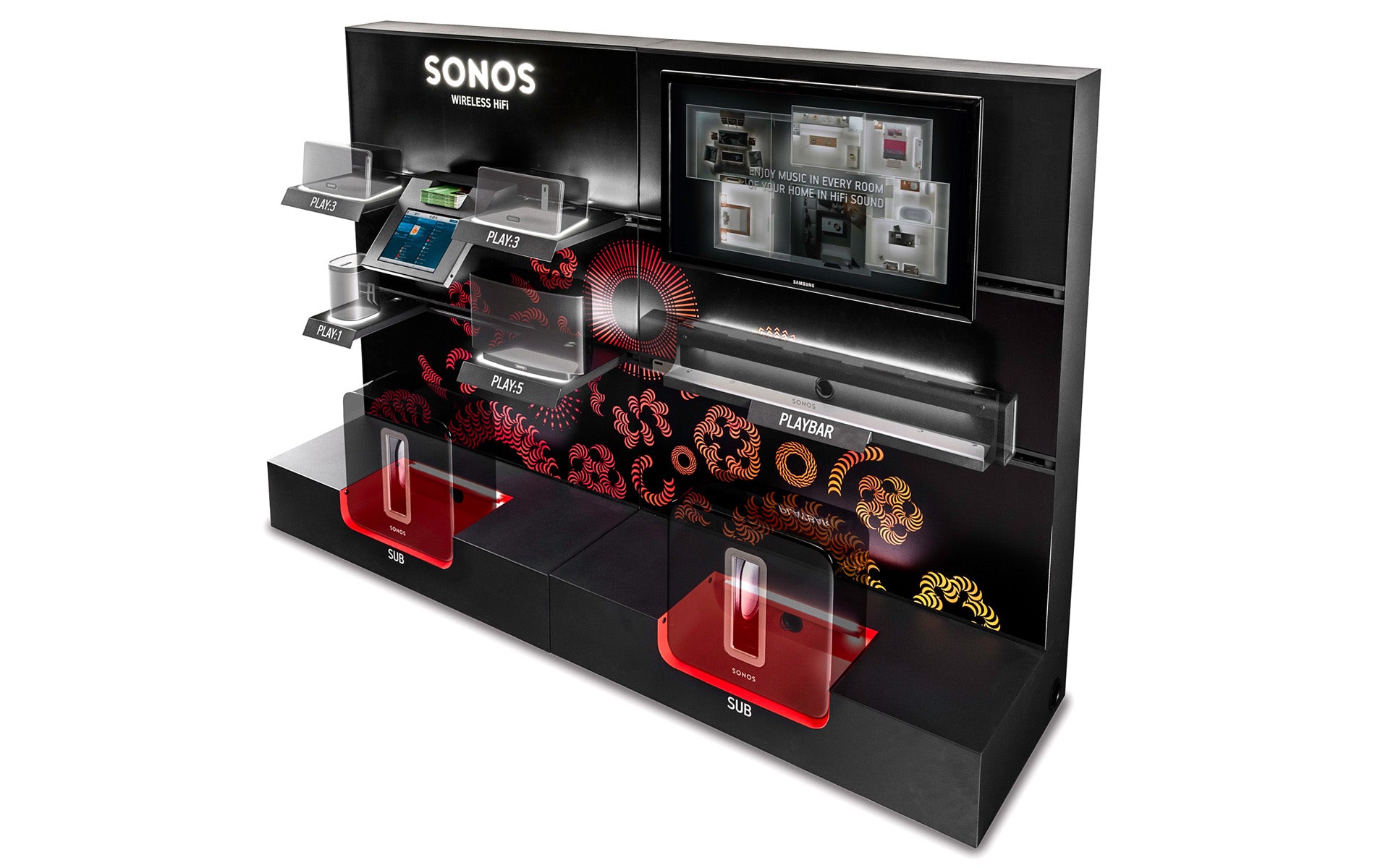

A useful POS display brief tells potential partners what the display must achieve, where it will operate, what products it will hold, how long it must last, how many stores are involved and when installation must be complete.

Material sustainability cannot be judged by a single label. The complete lifecycle—including source, material quantity, manufacturing, freight, useful life, reuse and end-of-life recovery—should be assessed.

A straightforward custom cardboard POS display may take approximately six to ten weeks from a complete brief to delivery. A semi-permanent or permanent display program may require ten to sixteen weeks, while interactive displays, offshore production and complex nationwide installations can require sixteen weeks or longer.

The right choice depends on more than the desired lifespan. Product weight, retailer requirements, campaign objectives, quantity, freight, installation and total cost should all influence the decision.

There is no standard price for a custom point-of-sale display in Australia. The cost depends on the type of display, its size, materials, structural complexity, quantity, printing, electronics, packaging, freight and installation requirements.
This guide explains the main cost components, where budgets commonly increase and how to obtain a more accurate custom POS display quote.

The question facing physical retail today is different.
What can a store provide that a website cannot?
Increasingly, the answer is experience.

Retail displays occupy a unique position within the customer journey. They exist at the precise moment where awareness becomes action. They influence what customers notice, how they interact with products and, ultimately, what they purchase.

As retail evolves, stores are increasingly becoming destinations rather than transaction points. This shift has profound implications for retail display design.

Understanding why consistency matters—and how to achieve it—is critical for any brand operating across a multi-store network.

For brands working with specialists like Informed Design, the goal is not simply to create attractive displays — it is to align physical design with merchandising strategy to maximise in-store performance.

Retail display design, when executed at a high level, is not about making products look good — it is about engineering customer behaviour. It determines what people notice, how they move, what they engage with and ultimately what they buy.

For companies like Informed Design, product launch displays are not treated as an afterthought or a simple merchandising requirement. They are designed as performance assets — tools that translate marketing intent into physical engagement and, ultimately, into sales.


